


The global market for AI in sports is exploding, with recent forecasts projecting it will surge from $7.63 billion in 2025 to nearly $27 billion by 2030, a staggering 28.69% compound annual growth rate. This isn’t just a trend; it’s a complete technological takeover. Artificial intelligence is no longer a futuristic concept but an essential tool embedded in every facet of the athletic world. From the grassroots to the professional leagues, AI in sports is fundamentally rewriting the playbooks for athletes, coaches, and the billions of fans who follow them. As we look toward 2026, the convergence of machine learning, computer vision, and big data is set to deliver unprecedented advancements that will redefine what’s possible on and off the field.
The tidal wave of sports technology innovations for 2026 is already building momentum. We’re moving beyond simple stat-tracking and into an era of predictive analytics, hyper-personalization, and immersive experiences that were once the stuff of science fiction. The demand for a competitive edge, coupled with the need for deeper fan engagement, is fueling this revolution. This article will explore the top 10 AI innovations that are not just changing the game but creating an entirely new one.
The Unstoppable Growth of AI in Sports
The integration of AI is no longer optional; it’s a core component of modern sports strategy. Organizations from the NBA to the world’s top football clubs are leveraging AI to dissect performance, mitigate injuries, and craft unique fan experiences. The sheer volume of data now available from wearables, in-stadium cameras, and broadcast feeds provides the fuel for powerful AI engines that uncover insights invisible to the human eye. This data-driven approach is a key driver behind the market’s explosive growth, with some estimates predicting the market could reach nearly $30 billion by 2032.
This rapid adoption signals a fundamental shift. The future of sports analytics is not just about reviewing what happened but predicting what will happen next. This predictive power is the true game-changer, offering teams the ability to make proactive decisions that can mean the difference between a championship title and a season plagued by setbacks. The AI sports technology trends we’re seeing today are just the beginning of a much larger transformation.
1. Hyper-Personalized Athlete Training and Recovery
The era of one-size-fits-all training programs is officially over. The future is all about AI for athlete performance, creating hyper-personalized regimens based on an individual’s unique biometric data. Companies like Catapult Sports are at the forefront, using AI-powered wearables to track every metric imaginable—from acceleration and deceleration to player load and fatigue. These systems don’t just collect data; they analyze it in real time to identify patterns that predict overtraining risks or highlight performance dips.
This allows coaches to make instant adjustments, pulling a player from a drill if their data shows signs of overexertion long before the athlete even feels it. AI models can now create customized training and recovery plans that optimize an athlete’s physical state, suggesting specific exercises, nutrition adjustments, and even sleep schedules to ensure they are at peak condition. For example, by analyzing subtle imbalances in a player’s movement, AI can flag an elevated risk for common injuries like ACL tears, allowing for preemptive intervention.
2. AI-Powered Injury Prevention
Perhaps the most impactful application of AI in sports is its ability to predict and prevent injuries before they happen. Traditional sports medicine is reactive, treating injuries after they occur. AI flips that script to be predictive. Systems from companies like Zone7 analyze millions of hours of player data—from training loads and match intensity to sleep patterns and biomechanics—to identify the subtle warning signs that precede an injury.
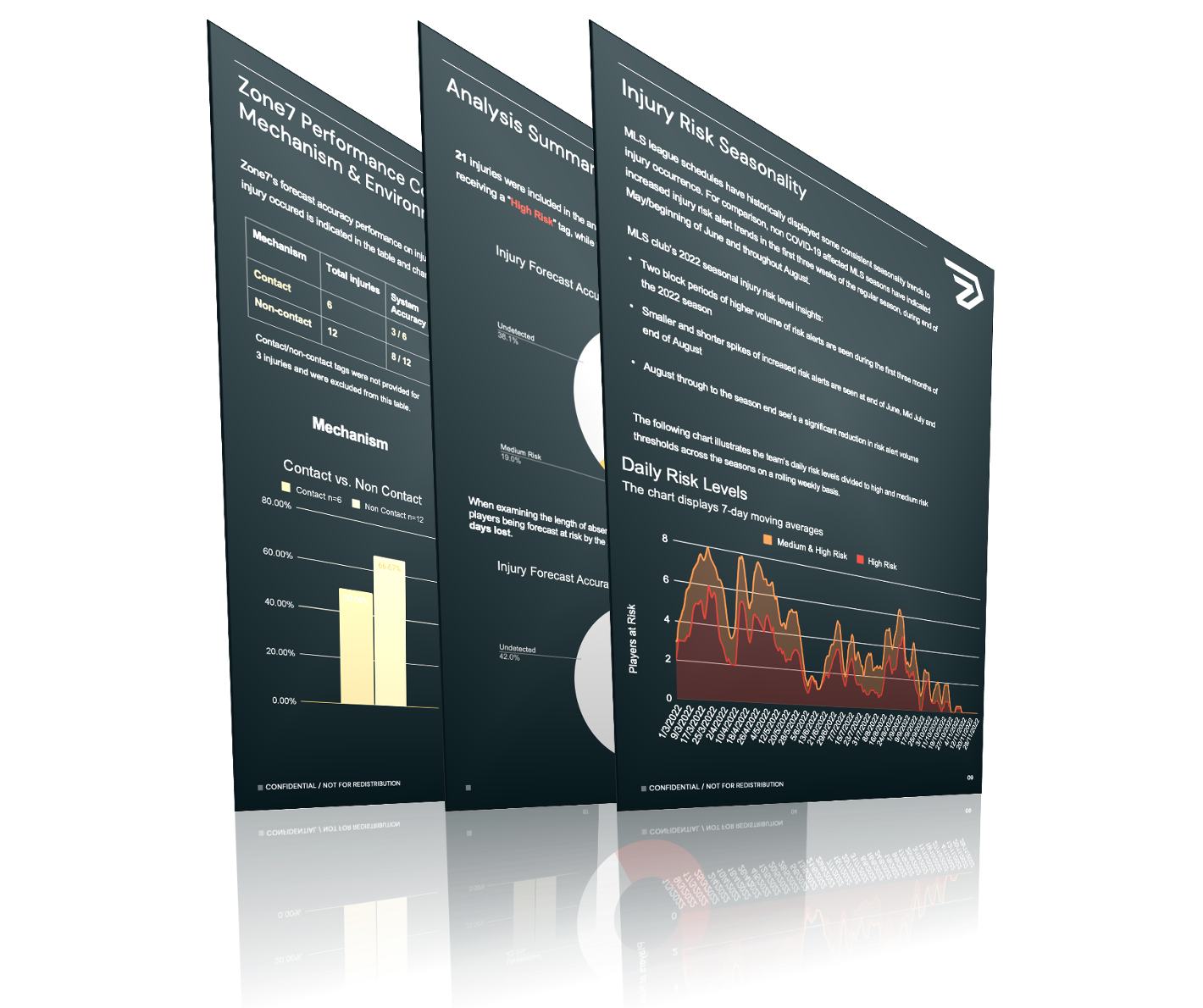
The results are staggering. Some professional soccer clubs using these systems have reported injury reductions of over 60%. By flagging at-risk players, medical staff can intervene with targeted rest, therapy, or modified training, keeping their stars on the field and out of the medical tent. The NFL has also embraced this technology, partnering with AWS to create the “Digital Athlete,” a virtual representation of every player used to simulate plays and understand the impact on their bodies, helping to reduce injuries like concussions. This focus on predictive health analytics is a major reason the injury prevention segment of the AI in sports market is expected to grow at a massive 35% CAGR.
3. Real-Time Strategy and Predictive Analytics
Coaches no longer have to rely solely on intuition. The future of sports analytics involves AI assistants providing real-time tactical suggestions during a game. Platforms like Stats Perform’s Opta Vision merge event data with player tracking data to create incredibly rich, AI-powered insights. These systems can analyze a team’s formation in and out of possession, identify the impact of defensive pressure, and even predict the likelihood of a pass being completed based on the movement of every player on the field.

Imagine a football manager getting an alert that a specific defensive shape is vulnerable to a certain type of attacking run, allowing them to make a substitution or tactical tweak on the fly. Or a basketball coach using AI to simulate the final seconds of a close game to determine the highest-percentage play. This level of analysis, delivered instantly, gives teams a significant strategic advantage. It’s about turning massive datasets into clear, actionable intelligence when it matters most.
4. Automated Scouting and Talent ID
Finding the next superstar player is one of the most challenging aspects of running a sports franchise. AI is revolutionizing this process by automating talent identification and removing human bias. AI algorithms can sift through immense databases of performance statistics, video footage, and even biometric data from youth leagues around the world to flag players with high potential.

Platforms like AiSCOUT use computer vision technology to allow athletes to perform drills from anywhere, with the AI analyzing their technique, agility, and power. This democratizes the scouting process, giving undiscovered talent in remote regions a chance to be seen by top clubs. The AI can identify physical and technical attributes that correlate with success at the professional level, presenting scouts with a data-vetted shortlist of players. This data-driven approach allows teams to make smarter, more objective recruitment decisions, unearthing hidden gems that traditional scouting methods might have missed.
5. Immersive and Personalized Fan Experiences
The way we watch sports is undergoing a radical transformation, driven by AI. Broadcasters and leagues are moving away from a one-size-fits-all feed and toward hyper-personalized content designed to deepen fan engagement. For example, the NBA has used generative AI to create over 50,000 unique highlight clips, customized to a viewer’s favorite player or team, leading to a 62% higher retention rate on their app. This is a core component of emerging AI sports technology trends.
This personalization extends to the stadium itself. Smart stadiums are using AI to manage everything from crowd flow to concession stand inventory. In the near future, your stadium app might guide you to the parking spot with the easiest exit, show you the restroom with the shortest line, and send you a notification when your favorite player’s jersey is on sale. Augmented reality overlays, delivered through your phone or AR glasses, will provide real-time stats and player information as you watch the live action.
6. AI-Enhanced Sports Broadcasting
Artificial intelligence is not just personalizing content; it’s also automating and enhancing the entire production process. AI-powered cameras can now automatically track the action, select the best angles, and produce a high-quality broadcast without a large human crew, making it possible to stream lower-tier and youth games that previously went uncovered. This democratization of sports coverage is a massive leap forward.
For major broadcasts, AI is adding layers of insight that enrich the viewing experience. During Paris 2024, Alibaba Cloud’s AI algorithm provided freeze-frame, 360-degree replays that allowed for detailed analysis of athlete movements, a feature set to be enhanced for the Milano Cortina 2026 Winter Olympics. AI can also generate real-time data visualizations, such as showing a Formula 1 driver’s telemetry data or highlighting the ground a tennis player has covered, turning complex data into intuitive graphics for fans.
7. Automated Officiating and Umpiring
Human error is an unavoidable part of sports, but AI is making officiating more accurate and instantaneous than ever before. Technologies from companies like Hawk-Eye Innovations, now a division of Sony, have become indispensable in sports like tennis and cricket for making precise line calls. The system uses a network of high-speed cameras to create a 3D representation of the ball’s trajectory, determining its position with an error margin of just a few millimeters.

This technology is rapidly expanding. The NBA now uses Hawk-Eye to enhance officiating by increasing the accuracy of calls and speeding up gameplay. Major League Baseball is on track to implement an automated ball-strike system for the 2026 season, using the technology to assist human umpires. While the role of the human official isn’t disappearing, AI is providing them with powerful tools to make the right call in critical moments, increasing fairness and reducing controversial delays. The data shows that after Hawk-Eye’s introduction in tennis, umpires’ overall mistake rate dropped significantly.
8. Generative AI for Marketing and Content
The creative side of sports is also being revolutionized by AI. Sports organizations are now using generative AI to create marketing copy, social media posts, and even video content at an incredible scale. This technology can analyze fan data to craft hyper-personalized marketing messages that resonate on an individual level. Imagine receiving an email with a highlight reel of your favorite team’s latest win, complete with a personalized message and a special offer on merchandise featuring the game’s top player.
This is already happening. Generative AI can produce thousands of variations of an ad campaign, tailored to different demographics and fan preferences, dramatically increasing engagement. Brands have even started creating digital avatars of famous athletes for marketing campaigns, allowing them to produce content in multiple languages and adapt to cultural trends on the fly, as Adidas did with a virtual version of Lionel Messi. This is one of the sports technology innovations for 2026 that will have a huge commercial impact.
9. Smart Venues and AI-Driven Operations
The fan experience begins the moment you leave for the stadium, and AI is working to make that entire journey seamless. Smart stadiums are using AI and IoT (Internet of Things) sensors to create a safer, more efficient, and more enjoyable environment. AI-powered security systems can monitor crowds and identify potential threats in real time, while predictive analytics help stadium operators manage traffic flow both inside and outside the venue.
This extends to all aspects of operations. AI can optimize energy consumption in the venue, predict demand at concession stands to reduce wait times and food waste, and even power dynamic ticket pricing based on demand. The goal is to create a frictionless experience for every fan. As we head toward 2026, expect to see more venues adopt these technologies to create a truly connected and intelligent stadium environment, a key part of the future of AI in sports.
10. The Future of Sports Betting with AI
The sports analytics market, a huge driver of AI in sports, is also transforming the sports betting industry. AI algorithms are now at the core of modern sportsbooks, processing vast amounts of historical data, player stats, and even weather conditions to generate more accurate, real-time odds. For bettors, AI-powered platforms can provide predictive insights and model potential game outcomes, offering a new level of analytical depth.
Beyond setting odds, AI is also crucial for maintaining the integrity of sports betting. These systems are highly effective at detecting unusual betting patterns and flagging potential match-fixing or fraudulent activity, helping to keep the competition fair. As the sports betting market continues to grow, the role of AI in providing both sophisticated analytics and robust security will become even more critical.
How AI in Sports is Changing the Game for Everyone
The revolution driven by AI in sports is not confined to the elite level. Its impact is cascading down to amateur leagues, collegiate programs, and individual athletes. The rise of affordable AI coaching apps and wearable sensors means that data-driven insights once reserved for professional teams are now accessible to everyone. This democratization of high-performance tools is leveling the playing field and fostering talent in unprecedented ways.
Furthermore, these AI sports technology trends are creating entirely new career paths. The demand for sports data scientists, performance analysts with AI specializations, and AI engineers is skyrocketing. For fans, the experience is becoming richer, more interactive, and more personal than ever before. The continued development of AI for athlete performance and the future of sports analytics promises a world where the boundaries of human potential are constantly being pushed, and our connection to the games we love is deeper and more engaging. The sporting edge of tomorrow is, without a doubt, powered by AI.
Frequently Asked Questions
What is AI in sports?
AI in sports refers to the use of artificial intelligence technologies like machine learning, computer vision, and predictive analytics to improve athlete performance, enhance coaching strategies, prevent injuries, automate officiating, and create more personalized and immersive experiences for fans.
How is AI being used for athlete performance?
AI is used to create hyper-personalized training and recovery programs by analyzing biometric data from wearables. It tracks metrics like workload, fatigue, and biomechanics to optimize training, suggest rest periods, and provide real-time feedback to prevent overexertion and enhance physical conditioning.
Can AI really predict sports injuries?
Yes, AI platforms can predict the likelihood of an injury with significant accuracy. By analyzing vast datasets including training load, player movements, and historical injury data, AI models identify patterns that indicate a heightened risk, allowing medical staff to intervene proactively before an injury occurs.
What are the main AI sports technology trends for 2026?
Key trends include the use of AI for real-time strategic decision-making during games, automated talent scouting, AI-powered officiating to improve accuracy, immersive fan experiences through AR and personalized content, and the use of generative AI for sports marketing and content creation.
How does AI improve the fan experience?
AI enhances the fan experience by delivering personalized content, such as custom highlight reels for a favorite player. It also powers smart stadiums for better crowd management, provides augmented reality overlays with real-time stats during broadcasts, and creates more interactive and engaging digital platforms.
What is the future of sports analytics?
The future of sports analytics is moving from descriptive (what happened) to predictive and prescriptive (what will happen and what should we do). AI will provide coaches with real-time tactical suggestions, predict game outcomes with greater accuracy, and uncover complex strategic insights that are invisible to human analysis.
Will AI replace human referees and umpires?
While AI is being used to automate certain calls (like line calls in tennis or ball-strike zones in baseball), it is more likely to augment rather than completely replace human officials. AI systems serve as a powerful and highly accurate tool to assist referees in making faster, more consistent, and fairer decisions, especially in critical moments.
AI in sports is fascinating. The intersection of technology and athletics is evolving rapidly.
This is a masterclass in showing AI’s impact beyond theory. The depth across performance, strategy, fan engagement, and even sports integrity makes it clear: AI isn’t optional in sports anymore, it’s redefining the entire ecosystem.
I talk about the latest AI trends and insights. If you’re interested in practical ways AI is transforming performance, and strategy, check out my Substack. I’m sure you’ll find it very relevant and relatable.