


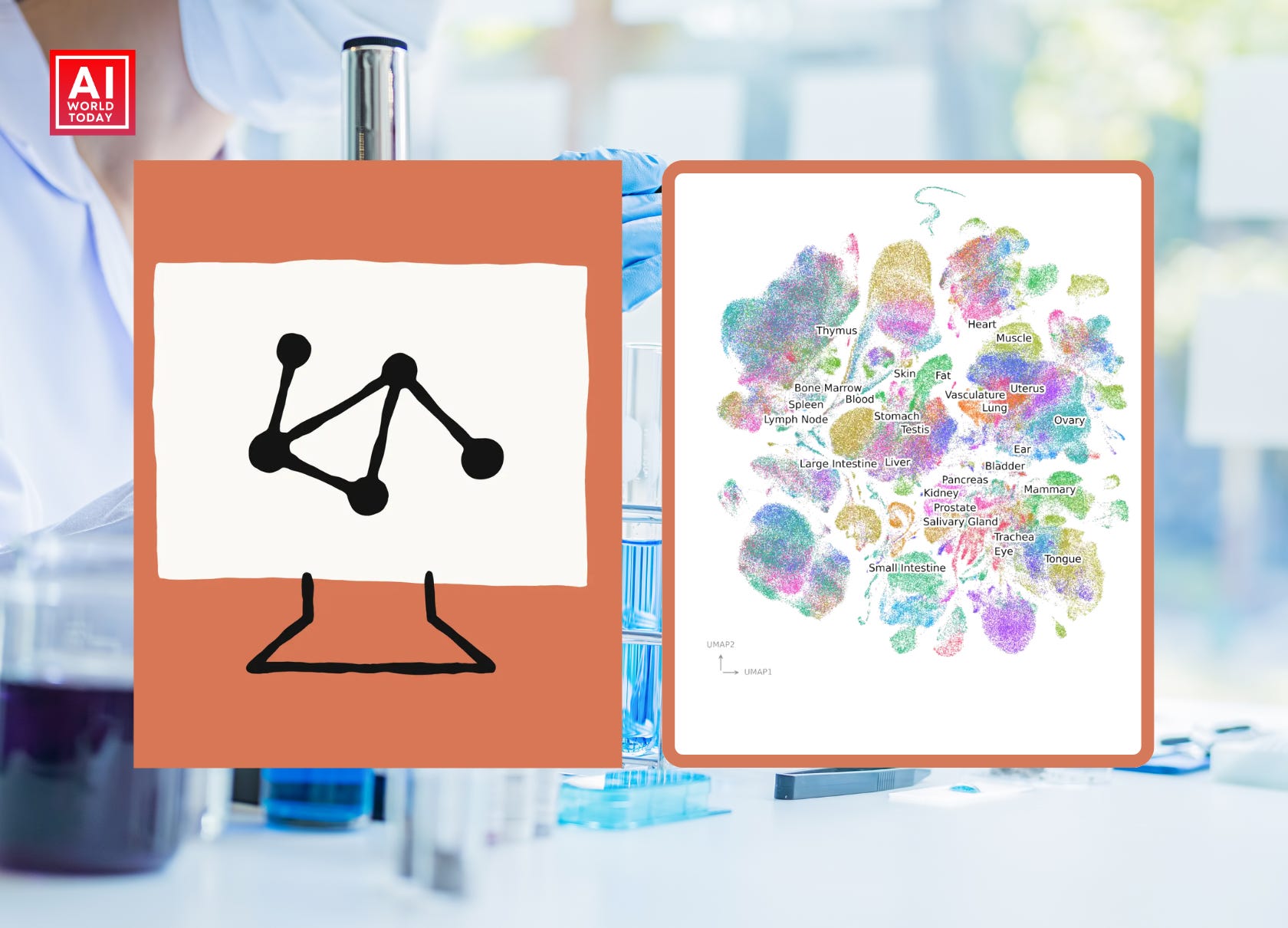
AI drug discovery just got a serious infrastructure upgrade. Anthropic integrated the NVIDIA BioNeMo Agent Toolkit into its Claude Science research workbench, bringing NVIDIA’s life sciences tools into Anthropic’s new public beta product for scientific research. That single sentence captures a genuine turning point: two of the biggest names in computing and AI have joined forces to attack one of medicine’s oldest bottlenecks, and they did it in the span of a single week in late June 2026.
This isn’t a vague partnership announcement full of corporate platitudes, either. It’s a concrete technical integration with real numbers attached. NVIDIA says 18 of the top 20 pharmaceutical companies already use BioNeMo, which means this deal instantly plugs Claude Science into an ecosystem with massive existing reach across pharma R&D departments.
Why AI Drug Discovery Needed This Partnership
Let’s talk money first, because the economics of pharmaceutical research explain exactly why this integration matters. According to Tufts Center for the Study of Drug Development, the cost of developing a new drug from discovery to market is about $2.6 billion and takes over a decade’s worth of work. That figure alone tells you why every pharma executive on earth is desperate for tools that shave even a few percentage points off timelines.
The AI models for drug discovery market has responded accordingly, with explosive growth that reflects genuine industry hunger for solutions. Depending on which analyst firm you trust, projections vary widely, but multiple reports converge on triple-digit percentage growth by the mid-2030s, and the global AI in drug discovery market size is calculated at USD 24.51 billion in 2026, expected to reach around USD 160.49 billion by 2035. Even more conservative estimates still show the sector roughly tripling or quadrupling within a decade.
Here’s the thing, though. Raw AI intelligence alone was never the actual bottleneck. As one industry report put it bluntly, the constraint has shifted toward workbench integration and ecosystem connectivity rather than pure model capability. Scientists don’t lack smart algorithms. They lack a single environment where those algorithms can talk to lab equipment, genomic databases, and each other without a small army of software engineers gluing everything together.
What Claude Science AI Workbench Actually Does
Anthropic’s answer to that fragmentation problem is the Claude Science AI workbench, unveiled at a launch event in San Francisco. Anthropic describes it directly: Claude Science is an app that integrates the tools and packages that researchers most commonly use, produces auditable artifacts, and provides flexible access to computing resources. That auditability piece matters enormously in regulated science, where every conclusion needs a paper trail.
Under the hood, the platform is genuinely ambitious in scope. It runs on Anthropic’s existing Claude architecture, including Claude Opus 4.8, and layers a coordinating agent with over 60 curated skills and connectors pre-configured for genomics, single-cell analysis, proteomics, structural biology, and cheminformatics. Rather than forcing researchers to bounce between a dozen disconnected programs, Claude Science tries to fold everything into one conversational interface.
The design philosophy here reflects a real pain point that Anthropic articulates well. Researchers must work across dozens of databases, each with their own schema, contend with file formats that require bespoke data pipelines and viewers, and transition between a roster of tools including PubMed, Jupyter, R, and cluster terminals. Anyone who’s spent a career doing bench science recognizes that description immediately.
Deployment flexibility is another selling point worth flagging. Like a Jupyter Notebook, you can access Claude Science wherever you already work, locally on macOS or Linux, or on a remote machine over SSH or an HPC login node. Sensitive genomic data doesn’t need to leave a lab’s own servers, which addresses one of the biggest compliance headaches in biomedical computing.
Early Results From Real Labs
Numbers from actual early adopters give the platform some credibility beyond marketing copy. At UCSF, epidemiologist Stephen Francis reported that work on glioma molecular epidemiology that once took his team as long as two years to compile into a review can now happen dramatically faster, with roughly a 90% speedup in his germline analysis workflows. Separately, another UCSF researcher used Claude Science to identify viral contamination in a dataset within minutes, contamination that had gone undetected for a year using conventional methods.
At the Allen Institute, neuroscientist Jerome Lecoq used multi-agent workflows within the platform to extract key claims from thousands of scientific papers, compressing literature review timelines that used to eat months of research time. These aren’t hypothetical use cases dreamed up in a pitch deck. They’re documented outcomes from people actually running the software against real data.
The NVIDIA BioNeMo Agent Toolkit Connection
So where does NVIDIA fit into all this? The NVIDIA BioNeMo Agent Toolkit supplies the computational muscle that Claude Science’s reasoning layer needs to actually execute heavy scientific workloads. NVIDIA built out what it calls a full GPU-accelerated computing stack for life sciences, and that decade-long investment now plugs directly into Anthropic’s conversational interface rather than requiring separate custom servers or containers.
The performance numbers here are eye-catching. The toolkit packages specialized libraries such as Parabricks for genomic analysis, creating roughly 11 times the processing speed of other hardware and cutting processing times from hours down to minutes. For cellular biology work specifically, RAPIDS single-cell, built with scverse, cuts down the time to precluster a 1.3 million cell dataset from 52 minutes to a mere 25 seconds. Chemistry work benefits too: a component called nvMolKit accelerates operations like molecular similarity searches and conformer generation by roughly 3,000 times over comparable hardware setups.
Underneath these acceleration layers sit some genuinely important open models. The toolkit exposes BioNeMo’s open models, including Evo 2 for genomics, Boltz-2 and OpenFold3 for protein structure, alongside BioNeMo NIM microservices that package those models as containerized inference endpoints with the accelerated software stack pre-tuned. That combination of open models plus optimized infrastructure is what lets protein structure prediction tools operate at a speed that actually keeps pace with an AI agent’s reasoning loop instead of becoming its own separate bottleneck.
Crucially, NVIDIA structured this integration to be flexible rather than locked into one ecosystem. BioNeMo Agent Toolkit is being offered as an open, harness-agnostic framework, meaning the same skills can be used across different agent systems and research platforms. That’s a smart hedge, letting NVIDIA extend BioNeMo’s reach even if pharma customers eventually mix and match different AI vendors for different tasks.
Autonomous Drug Discovery Workflows in Practice
What does this actually look like on a scientist’s screen? A researcher can describe a task such as analyzing a genomic sequence, predicting a protein structure, or designing a potential binder in plain language, and the coordinating agent breaks that request into steps, spinning up specialist sub-agents as needed. That’s the essence of autonomous drug discovery workflows: natural language goes in, orchestrated computational biology comes out, with a reviewer agent checking citations and calculations before handing results back to the human.
Early demonstrations of these workflows have already produced tangible results. Anthropic’s platform independently identified potential treatments for phenylketonuria, a rare metabolic disorder caused by the buildup of an amino acid called phenylalanine, during internal testing. In another documented case, the tool analyzed 100 rare genetic diseases in under an hour, flagging 32 candidates for computational screening.
Key capabilities baked into these autonomous workflows include:
Multi-agent orchestration, where a central assistant spawns specialized sub-agents for individual research tasks
Auditable research histories with full documentation of underlying code and methodology
Native rendering of 3D protein structures, genome browser tracks, and chemical structures
Session forking that lets researchers compare alternative analytical approaches side by side
Reviewer agents that check citations and calculations before final output
Generative AI for Life Sciences: A Crowded, Fast-Moving Field
Anthropic and NVIDIA are hardly operating in a vacuum here. Generative AI for life sciences has become a genuine three-way race among frontier labs. OpenAI released GPT-Rosalind in April 2026, a specialized biological reasoning model, though access remains limited to qualified U.S. corporate customers, while Google DeepMind is leveraging proprietary assets like AlphaFold, integrating them deeply into its own Gemini for Science platform.
Each lab is placing a distinctly different strategic bet. Anthropic is betting on engineering, building a broad, integrated workbench that connects to existing tools and databases, while OpenAI is attempting to define benchmarks for the field and Google leans on its historical AlphaFold advantage in structural biology. None of these approaches is obviously wrong, and it’s entirely plausible different labs end up dominating different corners of the pharma workflow.
Anthropic backed its ambitions with real capital, too, not just a product launch. In April 2026, Anthropic acquired Coefficient Bio, an eight-person startup founded by ex-Genentech computational biologists, for approximately $400 million, a deal that clearly supplied domain expertise ahead of the Claude Science launch. The company is also putting skin in the game by launching its own internal preclinical drug discovery programs targeting neglected diseases that traditional pharmaceutical companies wouldn’t pursue for commercial reasons.
The Business Case: Why Pharma Is Paying Attention
Beyond the technical wizardry, there’s a straightforward business logic driving pharma adoption. Companies are under constant pressure to compress multiyear discovery cycles, combined with the roughly 2.6 billion dollar average cost of commercializing a single molecule, which is steering budget toward platforms that simulate medicinal-chemistry tasks at industrial scale. When a single failed drug candidate can represent hundreds of millions in sunk costs, even marginal improvements in early-stage screening accuracy translate into massive savings.
Anthropic is clearly betting that its own experience running drug discovery programs will make it a more credible vendor. Company leaders framed the internal drug programs as a way to build development experience and credibility with the biopharma customers it’s selling Claude Science to, essentially eating its own cooking before asking others to buy the recipe.
The commercial incentives extend to research funding as well. Anthropic announced it would support up to 50 Claude Science AI for Science projects, providing up to $30,000 in credits per project, with applications open through July 15, 2026. That kind of grant program tends to accelerate real-world testing far faster than organic adoption alone, giving Anthropic a steady stream of case studies and bug reports from labs that might otherwise never touch the platform.
What This Means for Researchers and the Industry
For working scientists, the practical takeaway is straightforward: tools that used to require a computational biology specialist and weeks of setup time are becoming accessible through natural language requests. For biopharma executives, the calculus is different. Every major AI lab is now shipping a dedicated science product, and companies watching from the sidelines face a real question about whether to build internal capabilities or license platforms like Claude Science outright.
The competitive pressure isn’t going away, either. With OpenAI, Google DeepMind, and Anthropic all racing to lock in early biopharma partnerships, and with NVIDIA supplying picks-and-shovels infrastructure across nearly the entire industry, the next 12 to 18 months should reveal which combination of model reasoning and computational infrastructure actually moves clinical pipelines faster. If you work in computational biology, genomics, or pharma R&D, now is the moment to start testing these tools directly, since the grant application window and beta access are both open right now, and the labs experimenting today will likely define best practices for everyone else tomorrow.
Frequently Asked Questions
What is Claude Science?
Claude Science is Anthropic’s AI workbench for scientific researchers, built on Claude models like Opus 4.8, that integrates over 60 curated skills and connectors for genomics, proteomics, structural biology, and cheminformatics into a single research environment.
How does NVIDIA BioNeMo integrate with Claude Science?
The NVIDIA BioNeMo Agent Toolkit plugs directly into Claude Science, giving research agents access to GPU-accelerated models like Evo 2, Boltz-2, and OpenFold3, along with optimized libraries for genomic analysis, single-cell processing, and cheminformatics.
How many pharmaceutical companies already use BioNeMo?
NVIDIA states that 18 of the top 20 global pharmaceutical companies currently use the BioNeMo platform in some capacity within their research operations.
Is Claude Science available to the public?
Yes, it launched in public beta on June 30, 2026, and is available to Pro, Max, Team, and Enterprise subscribers on macOS and Linux systems.
How much does it cost to develop a new drug?
According to Tufts Center for the Study of Drug Development research, the average cost of developing and winning marketing approval for a new drug is roughly 2.6 billion dollars, spanning more than a decade of work.
What can autonomous drug discovery workflows actually do right now?
In documented early tests, these workflows have identified potential treatments for rare diseases like phenylketonuria, flagged dozens of candidates from analysis of 100 rare genetic diseases in under an hour, and detected data contamination that had gone unnoticed for a year using traditional methods.
Who are Anthropic’s main competitors in AI for science?
OpenAI offers a specialized biological reasoning model called GPT-Rosalind along with a broader science workspace product, while Google DeepMind integrates its AlphaFold protein-folding technology into a platform called Gemini for Science.
Is Anthropic actually developing its own drugs?
Yes, Anthropic announced internal preclinical drug discovery programs focused on neglected diseases that major pharmaceutical companies have largely avoided due to unfavorable commercial economics, framing the effort as a way to gain firsthand development experience.
Wow! This is so amazing. I am a medical doctor. And I am watching curiously to see how AI is eventually adopted in prescription.